Breast, Plastic & Reconstructive

MatriDerm® is a unique collagen-elastin-template, which serves as a dermal replacement scaffold and can be applied both in a Single and Multi-Stage Procedure.

MatriDerm® is able to preserve closeness to human dermis, accelerate cell invasion, cell elongation and proliferation and limit myofibroblast formation which is associated with less wound contraction.[1-8] This scientific performance is as a result of our Advanced CryoSafe® Method which gently preserves the native structure with no chemical crosslinking.[1]

RAMP™ Leg Positioner

Under clinical evaluation MatriDerm® has shown to be fast and effective in the treatment of a range of full-thickness wounds, helping patients back to normal life and reducing the overall cost of care.

Matriderm Indications

  • Burns / Reconstructive
  • Burns / Acute
  • Trauma and Acute Wounds
  • Chronic Wounds
  • Cancer Excision
  • Adhesion Barrier
  • Donor Sites
  • Mucosal Defects

1. Böhm S et al.; Materials 2017; 10(9), 1086
2. Wiedner M et al., Wound Repair Regen, 2014, 22(6):749-54
3. de Vries H et al., Wound Repair Regen, 1994,2(1):37-47
4. de Vries H et al., Br J Dermatol., 1995, 132(5):690-7
5. Killat J et al., Int J Mol Sci. 2013 Jul 11, 14(7):14460-74
6. Dill, V. and Moergelin, M. Int Wound J 2020;17(3):618-630.
7. Kattan WM et al., J Coll Physicians Surg Pak 2017;27:38-43
8. Schmidt VJ et al., Ann Plast Surg. 2017;79(1):92-100

1. Böhm S et al.; Materials 2017; 10(9), 1086

The RECELL System is approved for the treatment of burn wounds and full-thickness skin defects, and for re-pigmentation of stable depigmented vitiligo lesions. RECELL harnesses the regenerative properties of a patient’s own skin to create Spray-On Skin™ cells, delivering a transformative solution at the point-of-care. This breakthrough technology serves as the catalyst for a new treatment paradigm enabling improved clinical outcomes.

RECELL® Spray-On Skin Australian distributor

Benefits Beyond Closure™

Expedite the healing process with early treatment at a cellular level

RECELL uses a small piece of the patient’s skin to create a multi-phenotype suspension of Spray-On Skin™ Cells.[1]   The application of different cell types stimulates healing and re-pigmentation throughout the wound bed.[2,3]

1. Wood FM, Giles N, Stevenson A, Rea S, Fear M. Characterisation of the cell suspension harvested from the dermal epidermal junction using a ReCell® kit. Burns. Published online November 12, 2011. doi:10.1016/ j.Burns.2011.03.001.

2. Navarro FA, Stoner ML, Lee HB, et al. Melanocyte repopulation in full-thickness wounds using a cell spray apparatus. J Burn Care Rehabil 2001;22:41–6.
3. Navarro FA, Stoner ML, Park CS, et al. Sprayed keratinocyte suspensions accelerate epidermal coverage in a porcine microwound model. J Burn Care Rehabil 2000;21:513–8.

The power of multi-phenotype Spray-On Skin Cells.

Autologous therapy at point-of-care allows for delivery of the patient’s own living cells:

KERATINOCYTES

regenerate the epidermis[4,5]

Dermal FIBROBLAST

deposit new extracellular matrix proteins[4]

MELANOCYTES

produce melanin to allow restoration of natural pigmentation[5]

4. Freedberg I, Tomic-Canic M, Komine M, et al. Keratins and the Keratinocyte Activation Cycle J Invest Dermatol 116:633-640, 2001.
5. Hirobe T. Keratinocytes regulate the function of melanocytes. Dermatol Sin. 2014;32(4):200-204.

4. Freedberg I, Tomic-Canic M, Komine M, et al. Keratins and the Keratinocyte Activation Cycle J Invest Dermatol 116:633-640, 2001.

5. Hirobe T. Keratinocytes regulate the function of melanocytes. Dermatol Sin. 2014;32(4):200-204.

  • Surgical Site Infections (SSI) are a common complication following breast surgery procedures, despite being considered a clean surgery, with incidences of infection typically ranging from 0.8–26%.[1]
  • SSI are associated with added morbidity, including prolonged hospitalisation by 2 weeks, 5 times the risk of readmission, an increase in average health care costs of up to $26,000 per patient, and twice the risk of death.[2]
FloraSeal®
  • FloraSeal has been shown to trap and immobilise bacteria that may cause infection to the patient. It rapidly and powerfully kills gram-positive and gram-negative bacteria.[3]
  • FloraSeal effectively reduces microbial colonisation within 15 minutes and maintains a low microbial colonisation throughout the 24 hours after application, has the same efficacy when being used with or without an antimicrobial surgical incise drape, and mitigates microorganisms more effectively than an antimicrobial surgical incise drape alone.[4]

1. Lavers, A., Yip, W. S., Sunderland, B., Parsons, R., Mackenzie, S., Seet, J., & Czarniak, P. (2018). Surgical antibiotic prophylaxis use and infection prevalence in non-cosmetic breast surgery procedures at a tertiary hospital in Western Australia-a retrospective study. PeerJ, 6, e5724. https://doi.org/10.7717/peerj.5724

2. Towfigh, S., Cheadle, W. G., Lowry, S. F., Malangoni, M. A., & Wilson, S. E. (2008). Significant reduction in incidence of wound contamination by skin flora through use of microbial sealant. Archives of surgery (Chicago, Ill.:1960), 143(9), 885–891.

3. Prince, D., Kohan, K., Solanki, Z., Mastej, J., Prince, D., Varughese, R., & Patel, M. (2017). Immobilization and death of bacteria by Flora Seal microbial sealant. Int J Pharm Sci Invent, 6(6), 45-49.

4. Data on File. HB Fuller - Medical Adhesives Technology

SurgiSeal® Topical Skin Adhesive is a high purity, antimicrobial, liquid topical skin adhesive that can replace sutures for incision or laceration repair.

SurgiSeal® is the only topical skin adhesive in the world to receive FDA 510K Clearance in demonstrating inhibition of gram-positive and gram-negative bacteria growth.[1]

SurgiSeal® provides the optimal balance between strength and flexibility. In replacing sutures for incision or laceration repair, it can save time, provide a flexible, water-resistant, protective coating, and eliminate the need for suture removal.

FloraSeal®

1. SurgiSeal IFU: Due to the anhydrous property of the SurgiSeal adhesive, gram+ and gram- bacteria which become incorporated within the adhesive upon application, are not expected to grow.

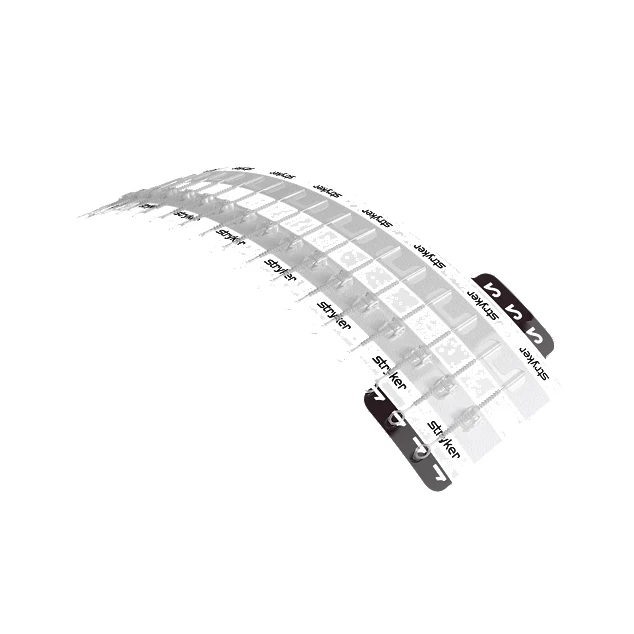
Zip is a non-invasive skin closure device for surgical incisions and lacerations. It's designed to distribute strain along the incision. This helps reduce wound complications[1,2], saving you cost and time.[3,5]

Zip’s benefits aren’t only limited to healthcare providers. The puncture-free skin closure method also leads to greater patient satisfaction.[6] This means less pain, a greater range of motion during recovery, and reduced scarring.[7,8]

Q-Close™ surgical suturesAustralian Distributor

1. Carli A., Haas SB. Novel Non-Invasive Secure Skin Closure Following Total Knee Arthroplasty: Fewer Wound Complications & No Patient Home Care Visits Compares to Staples, Paper presented at ISTA; 1 Oct 2015; Vienna, Austria.
2. Davis, A., et. al., Effect of Surgical Incision Closure Device on Skin Perfusion Following Total Ankle Arthoplasty, UF Health Poster Presentation at ACFAS, March 2017

1. Carli A., Haas SB. Novel Non-Invasive Secure Skin Closure Following Total Knee Arthroplasty: Fewer Wound Complications & No Patient Home Care Visits Compares to Staples, Paper presented at ISTA; 1 Oct 2015; Vienna, Austria.

3. Alnachoukati O, Emerson R, Muraguri M (March 20,2019) Non-Invasive, Zip Type Skin Closure Device vs. Conventional Staples in Total Knee Arthroplasty: Which Method Holds Greater Potential for Bundled Payments?. Cures 11(3):e4281. DOI 10.7759/cureus.4281

3. Alnachoukati O, Emerson R, Muraguri M (March 20,2019) Non-Invasive, Zip Type Skin Closure Device vs. Conventional Staples in Total Knee Arthroplasty: Which Method Holds Greater Potential for Bundled Payments?. Cures 11(3):e4281. DOI 10.7759/cureus.4281
5. Goldman DS, Hammill E, Aasbo J, Storne E, Reddy S. Improvement in S-ICD Incision Closure Time and High Implanter Satisfaction Using a Novel Skin Closure Device. Scientific presentation given at Asia-Pacific Heart Rhythm Society 2017 Meeting; Sep 16, 2017; Yokohama, Japan.

4. Tanaka, Y. et al. Randomized Study of a New Noninvasive Skin Closure Device for Use After Congenital Heart Operations. Ann Thorac Surg 2016.

5. Goldman DS, Hammill E, Aasbo J, Storne E, Reddy S. Improvement in S-ICD Incision Closure Time and High Implanter Satisfaction Using a Novel Skin Closure Device. Scientific presentation given at Asia-Pacific Heart Rhythm Society 2017 Meeting; Sep 16, 2017; Yokohama, Japan.

6. Menkowitz B, Olivieri G, Belson O (January 19, 2020) Patient Satisfaction and Cosmetic Outcome in a Randomized, Prospective Study of Total Knee Arthroplasty Skin Closure Comparing Zip Surgical Skin Closure with Staples. Cureus 12(1): e6705. DOI 10.7759/cureus.6705

7. Alnachoukati O, Emerson R, Muraguri M (March 20,2019) Non-Invasive, Zip Type Skin Closure Device vs. Conventional Staples in Total Knee Arthroplasty: Which Method Holds Greater Potential for Bundled Payments?. Cures 11(3):e4281. DOI 10.7759/cureus.4281
8. Benner RW, Behrens JP. Poster Presentation: “A Novel Skin Closure Device for (Bilateral) Total Knee Arthroplasty: Randomized Controlled Trial vs. Staples.” Poster Presentation presented at American Association of Hip and Knee Surgeons; Nov 3, 2017;

8. Benner RW, Behrens JP. Poster Presentation: “A Novel Skin Closure Device for (Bilateral) Total Knee Arthroplasty: Randomized Controlled Trial vs. Staples.” Poster Presentation presented at American Association of Hip and Knee Surgeons; Nov 3, 2017;

9. Levi K, Ichiryu K, Kefel P, et al. (October 12, 2016) Mechanics of Wound Closure: Emerging Tape-Based Wound Closure Technology vs. Traditional Methods. Cureus 8(10); e827. DOI 10.7759/cureus.827

10. Ko, J. H., Yang, I. H., Ko, M. S., Kamolhuja, E. and Park, K. K. (2016), Do zip-type skin-closing devices show better wound status compared to conventional staple devices in total knee arthroplasty?. Int Wound J, 14: 250-254. doi:10.1111/iwj.12596

4x

faster

than sutures[5]

12x

stronger

than sutures[9]

2x

better

cosmetic appearance[4]

ADAPTABLE® is the first fully-sterile, surgeon-controlled limb and retractor holder. The fully-mechanical carbon fibre surgical arm works seamlessly with any standard operating table and has the ability to reduce the number of assistants in the operating room. ADAPTABLE is easy to set up, transport, and store.

ADAPTABLE Limb and Retractor Holder - Australian distributor
  • PlasmaBlade™ shows equivalent cutaneous healing to scalpel with better POSAS score than scalpel.[5]
  • Use of the PlasmaBlade™ has been shown to produce a 2.4-day reduction in drainage duration and 386ml reduction in mean drainage volume in Mastectomy.[6]
  • Use of the PlasmaBlade™ during bilateral breast reduction was associated with a significant decrease in operative time (10%; 37.24 ± 15.30 min versus 41.55 ± 11.61 min; p = 0.04) compared to traditional electrosurgery.[7]
PlasmaBlade™
  • In a tissue study of surgical margins, the PlasmaBlade™ was associated with a decrease in thermal injury, improving sample quality compared to traditional electrosurgery.[8]
  • Significantly more breast tissue was removed per minute: 20 ± 11 g/min during bilateral breast reduction when using the PlasmaBlade™ versus 16 ± 8 g/min for traditional electrosurgery, a 23.9% difference (p = 0.0002).[7]

PROCEDURES

  • Mastectomy
  • Skin-sparing mastectomy
  • Nipple-sparing mastectomy
  • Oncoplasty
  • Patients with pacemaker, DBS, or spine stimulator insitu

5. Ruidiaz ME, Messmer D, Atmodjo DY, et al. Comparative healing of human cutaneous surgical incisions created by the PEAK PlasmaBlade, conventional electrosurgery and a standard scalpel. Plast Reconstr Surg 2011; Jul 28(1): 104-111.

6. Dogan L, Gulcelik MA, Yuksel M, et al. The effect of plasmakinetic cautery on wound healing and complications in mastectomy. J Breast Cancer. 2013;16(21):198-201.

7. Data on file. VR-00065 study summary. 71-10-2453.

8. Ruidiaz ME, Cortes-Mateos MJ, Sandoval S, et al. Quantitative comparison of surgical margin histology following excision with traditional electrosurgery and a low-thermal-injury dissection device. J Surg Oncol. 2011;104(7):746-754.

  • The RadiaLux™ lighted retractor is a single-use retractor designed to provide surgeons with the ability to manipulate soft tissue through a combination of blades when assembled onto a retractor handle.
  • The retractor provides illumination to the surgical field independent of an external light source or fibre optic cables.
  • Powered by a low-temperature LED, RadiaLux™ features four interchangeable blades optimized for access in advanced breast surgery. With a specially designed lens, light is directed towards the back of the surgical pocket in a unique radius improving visibility in the plane of dissection.
RadiaLux™

According to a recent review, application of a single-use negative pressure wound therapy system reduced the rate of SSI by 58% compared to standard of care. Additionally, patients had less hospital LOS compared to standard of care.[1]

RadiaLux™

The Genadyne NPWT portfolio is completely comprehensive, from Ultraportable Single-Use and Reusable Pumps to High Demand and Instil Pumps. The Dressing Portfolio is compatible across all NPWT Pumps, allowing for an all-inclusive ecosystem for a hospital institution. From Absorbent Dressings that can be used with or without NPWT, ready to use Foam Dressings, and all the way to large Foam Kits, Abdominal Kits and PVA Kits.

Closed incision management negative pressure has been proven to:

  • Protect the incision from external contamination
  • Hold closed incision wound edges together
  • Help reduce tensile forces across the incision
  • Help reduce oedema
  • Reduce seroma and haematoma fluid collection
  • Suitable for dehisced wounds, trauma wounds, partial thickness burns, flaps and grafts

Green Foam

More than just a colour…

The visual impact of the Genadyne Green Foam is undeniable. Green was chosen to allow clinicians to better differentiate between viable and nonviable tissue in the wound bed. The colour contrast increases differentiation with the wound bed.

RadiaLux™

Competitor

RadiaLux™

Patented Genadyne Green Foam

  • Genadyne Green Foam is a fully reticulated polyurethane foam made with polyether resin to allow better hydrolytic stability. The design increases performance under pressure and in moist environments.
  • The Dodecahedron cell structure gives a three-dimensional skeletal strand to the cells providing enhanced filtering qualities and increasing the removal of exudate and infectious materials. This cell structure also increases tensile strength to prevent fraying. Fraying is significantly reduced, preventing stray pieces from being left in the wound bed.
  • The combination of cell structure and composition gives the foam a non-adherent property, allowing for easier removal during dressing changes, thereby reducing pain and discomfort.
  • The foam creates direct contact with the wound bed, allowing for even distribution of pressure. This assists in reducing oedema and promotes tissue perfusion and granulation.

Properties

Benefits

Fully reticulated polyurethane foam

Increased hydrolytic stability

Polyether resin

Increased tensile strength

Pore Size

Boosts performance under pressure

Dodecahedron cell structure / 3 dimensional skeletal strands

Enhanced filtering qualities
Increased tensile strength
Reduced risk of fraying
Non-adherent properties
Reduced discomfort during dressing change

Variable Pressure

The advanced variable pressure capabilities of all of the Genadyne Negative Pressure Pumps, allow different negative pressures to be used without the downsides of painful intermittent therapy.

By maintaining negative pressure throughout the cycle, variable negative pressure wound therapy avoids losing an airtight seal and displacement of the dressing. This gradual “wave” is gentler to the patient increasing blood flow to the peri-wound and preventing ischemia. The changes in pressure are imperceptible to the patient, increasing patient comfort and compliance.

The literature suggests that the use of Variable Pressure is beneficial. It results in decreased blood flow that is known to stimulate angiogenesis and granulation tissue formation and to increase blood flow that is known to facilitate oxygenation and nutrient supply and removal of waste products. [2]

Cycling the negative pressure level may be beneficial especially when treating poorly vascularized tissue with a risk for development of ischemia, as pressure is released repeatedly.[2]

Image

Q-Close™ surgical sutures deliver the precision, reliability, and consistency surgeons expect—without the premium price tag.

Q-Close™ surgical suturesAustralian Distributor

Manufactured by Healthium Medtech, the world’s largest independent producer of surgical needles and one of the top global suture suppliers, Q-Close™ brings world-class quality to the Australian market.

Our range includes absorbable and non-absorbable options in a variety of sizes, materials, and needle configurations—engineered for optimal tissue handling, knot security, and minimal trauma. Backed by decades of surgical expertise and rigorous manufacturing standards, Q-Close™ gives you confidence in every closure.

AUSTRALIA

Revolution Surgical Pty Ltd
4/22 Rowood Road, Prospect NSW 2148
ABN: 63 165 643 434

NEW ZEALAND

Revolution Surgical New Zealand Ltd
378 Neilson Street, Penrose Auckland 1061 New Zealand
NZBN: 145-925-924

© 2018- Revolution Surgical

Website by: WebInjection